Reproducible routing evidence · MIT + CC BY 4.0
Multi-provider route-admission fixture
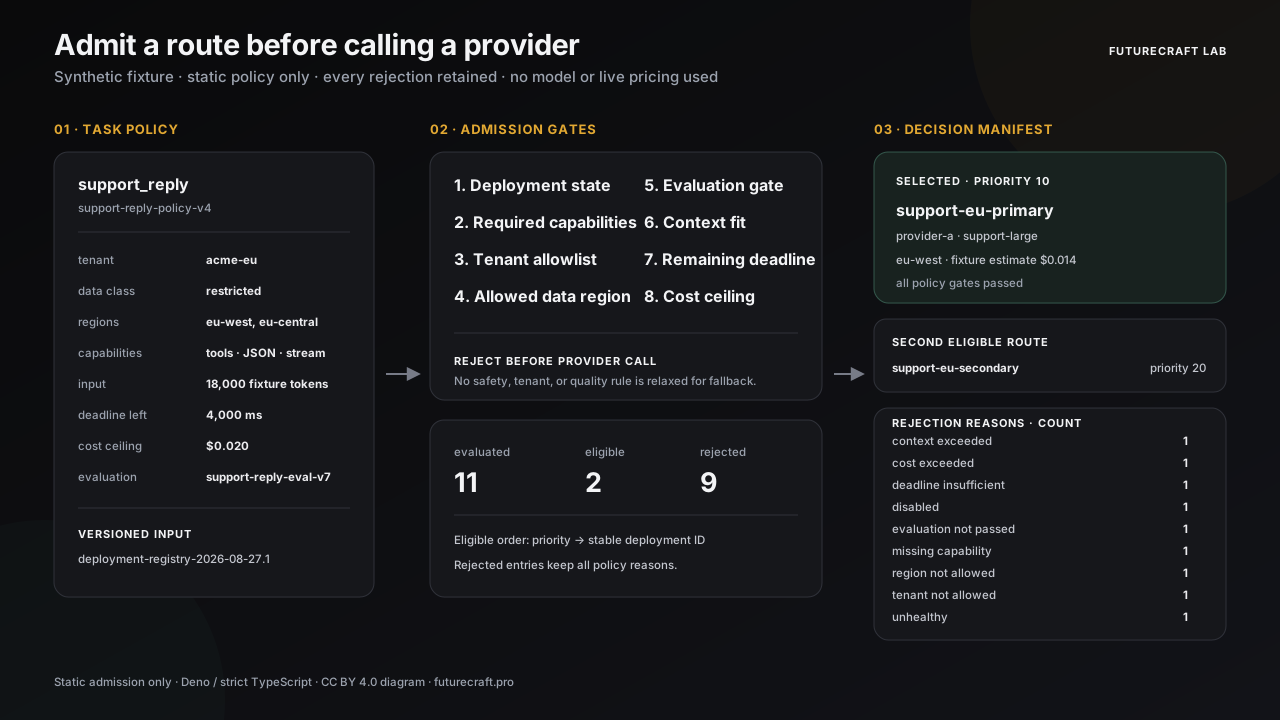
See why a deployment is allowed to receive an LLM task before any provider call happens. The bundle evaluates eleven synthetic deployments against capability, tenant, region, evaluation, context, deadline, cost, and health rules. Every rejection remains visible in the resulting manifest.
Files
Admission before ranking
A cheap or fast deployment cannot outrank a failed tenant, region, capability, or evaluation rule.
Deterministic selection
Eligible routes use declared priority and stable deployment ID, so registry input order cannot change the result.
Inspectable rejection
The manifest retains every rejected deployment, reason, policy version, and registry version needed for incident review.
Verified scope
Nineteen tests cover capability, tenant, region, evaluation, context, deadline, cost, deployment state, stable ordering, input immutability, version evidence, duplicate IDs, stored JSON, and the generated SVG. The reviewed run admitted two of eleven candidates and selected the declared priority-10 route.